AI Assistant & Chatbot Development (Chat, Voice & Advanced RAG)
Chat, voice and personal assistants that answer from your data, built on advanced RAG.
- Ideal for
- Support, sales, HR, education and internal knowledge teams
- Channels
- Website, app, WhatsApp-style chat, web voice and phone calls
- Languages
- English and Bangla, including mixed (Banglish) queries
The short version
Custom AI assistants that answer from your own data: chat assistants, voice and call assistants, and personal assistants, built on advanced RAG pipelines that stay accurate in production.
Every assistant is evaluated on real questions before launch, so accuracy is measured rather than assumed.
- Chat, Voice/Call & Personal AI Assistants
- Advanced RAG: Hybrid Search, RRF, Reranking
In short
- Chat assistants for websites, apps and internal teams, grounded in your documents and databases
- Voice and call assistants: real-time speech-to-text, LLM reasoning and text-to-speech over web or phone (LiveKit Agents)
- Personal and workplace assistants with memory, tools and auto skill selection
- Advanced RAG: chunking strategies, hybrid search (BM25 + dense vectors), Reciprocal Rank Fusion (RRF) and cross-encoder reranking
- Corrective RAG, Self-RAG, agentic and vectorless (reasoning-based) retrieval patterns
What you get
Assistant application
Chat and/or voice interface embedded in your website, app or phone line.
Knowledge pipeline
Ingestion of PDFs, web pages, docs and databases with scheduled re-indexing.
Admin panel
Manage the knowledge base, review conversations and track users.
Evaluation report
Accuracy, faithfulness and retrieval quality measured on real questions.
Observability
Langfuse tracing of every conversation plus usage and quality dashboards.
Key services & features
Scroll through what this service covers. Each capability is explained in technical depth further down.
Chat assistants
Website and in-app chat that answers from your documents with sources, 24/7.
Voice & call assistants
Real-time speech conversations on the web or by phone, with natural turn-taking.
Personal & workplace assistants
Assistants with memory, tools and auto skill selection that help people get work done.
Advanced retrieval
Hybrid search, Reciprocal Rank Fusion and cross-encoder reranking for accurate answers.
Self-correcting RAG
Corrective RAG, Self-RAG and agentic retrieval that check their own evidence.
Bilingual Bangla/English
Understands and answers in Bangla, English or a mix of both.
Multimodal input
Questions about images, scanned PDFs and tables, not only plain text.
Admin, analytics & tracing
Knowledge-base management, conversation review and Langfuse/Grafana monitoring.
Technical deep dive
The methods and terms behind the work, for technical teams who want to know exactly how it is built. Open any group to explore.
Chunking strategies
How documents are split decides what the retriever can find. The strategy is chosen per document type, and often several are combined.
- Fixed-size chunking
- Splits text every N tokens with an overlap. Fast and predictable; a good baseline for uniform text.
- Recursive character chunking
- Splits on paragraphs, then sentences, then words until chunks fit, keeping natural boundaries intact.
- Sentence-based chunking
- Groups whole sentences so no chunk ends mid-thought.
- Semantic chunking
- Uses embeddings to cut where the topic changes, so each chunk is about one idea.
- Document-structure chunking
- Follows headings, sections, Markdown or HTML structure, and keeps tables whole.
- Sliding window
- Overlapping windows so facts that span a boundary are never lost.
- Parent-child (small-to-big)
- Small chunks are matched precisely, then the larger parent section is sent to the LLM for context.
- Agentic chunking
- An LLM decides chunk boundaries and writes a title and summary for each chunk.
- Late chunking
- Embeds the whole document first, then pools token embeddings per chunk so each chunk keeps document context.
Retrieval & ranking
Finding the right evidence is most of the accuracy. Several retrievers run together and their results are fused and reranked.
- Dense search
- Embedding similarity in a vector database (Qdrant, FAISS, ChromaDB, Pinecone): finds meaning, even with different wording.
- Keyword (sparse) search
- BM25 matching of exact terms: product codes, names and numbers that embeddings miss.
- Hybrid search
- Dense and keyword search run together, so both meaning and exact matches are covered.
- Reciprocal Rank Fusion (RRF)
- Merges ranked lists from each retriever by rank position, giving a robust combined ranking without score calibration.
- Cross-encoder reranker
- A reranking model (for example bge-reranker or Cohere Rerank) rescores the top candidates against the question.
- Maximal Marginal Relevance (MMR)
- Picks results that are relevant but not repetitive, so the context covers more ground.
- Metadata filtering
- Restricts search by department, date, language or access rights.
- Query rewriting & multi-query
- Rephrases or expands the question into several searches, including follow-up questions in a chat.
- HyDE
- Generates a hypothetical answer and searches with it, which helps short or vague questions.
Advanced RAG patterns
Patterns that make the system check, correct or replace its own retrieval.
- Corrective RAG (CRAG)
- Grades retrieved documents; if they are weak, it rewrites the query or falls back to another source before answering.
- Self-RAG
- The model decides when to retrieve and critiques whether its answer is supported by the evidence.
- Adaptive RAG
- Routes each question to no retrieval, single-step or multi-step retrieval depending on its complexity.
- Agentic RAG
- An agent plans searches across several tools and sources and combines the results.
- GraphRAG
- Builds a knowledge graph of entities and relations for questions that connect many documents.
- Vectorless RAG
- Reasoning-based retrieval that navigates a document's table of contents or page index like a human expert, with no embeddings.
- Multimodal RAG
- Retrieves from images, scanned pages and tables alongside text.
- Auto skill selection
- The assistant picks the right skill or pipeline (search, calculator, form, handoff) for each request.
Voice & call assistants
Real-time voice needs low latency and natural conversation, not just text-to-speech on a chatbot.
- Speech-to-text (STT)
- Streaming transcription that handles accents and Bangla/English code-switching.
- Text-to-speech (TTS)
- Natural voices streamed sentence by sentence so replies start quickly.
- LiveKit Agents
- Real-time audio infrastructure for web voice and telephony integrations.
- Voice activity detection & barge-in
- Detects when the user starts speaking and stops the assistant mid-sentence, like a real conversation.
- Latency budget
- STT, retrieval, LLM and TTS tuned together to keep response time conversational.
- Call handoff
- Transfers to a human agent with a summary when the assistant should not handle it.
Evaluation & safety
Accuracy is measured, monitored and protected.
- RAGAS metrics
- Faithfulness, answer relevancy, context precision and context recall on a test set.
- Golden question set
- Real user questions with expected answers, re-run after every change.
- Citations
- Answers point to their sources so users and admins can verify them.
- Guardrails
- Topic limits, refusal rules, PII masking and prompt-injection defenses.
- Langfuse tracing
- Every retrieval, prompt and response traced for debugging and quality review.
- Grafana dashboards
- Usage, latency and accuracy trends from PostgreSQL in real time.
How we work together
Discover
Who will use the assistant, what they ask, which sources hold the answers and which channels matter.
Knowledge audit
Collect and clean documents and data; choose chunking per document type.
Build retrieval
Index, hybrid search, fusion and reranking, tested on real questions first.
Build assistant
Chat or voice interface, prompts, tools, guardrails and the admin panel.
Evaluate
RAGAS metrics and a golden question set; fix weak spots before launch.
Launch & monitor
Deploy with Docker, trace with Langfuse, review conversations and improve.
Tools & technologies
LLMs
- OpenAI
- Gemini
- Llama
- Mistral
RAG
- LangChain
- LangGraph
- Qdrant
- FAISS
- ChromaDB
- Pinecone
- BM25
Voice
- LiveKit Agents
- STT
- TTS
Backend & ops
- FastAPI
- PostgreSQL
- Docker
- Langfuse
- Grafana
Where this fits
Enterprise knowledge assistant
Blink AI at Banglalink: multimodal RAG with hybrid search, RRF and bilingual support.
University support office
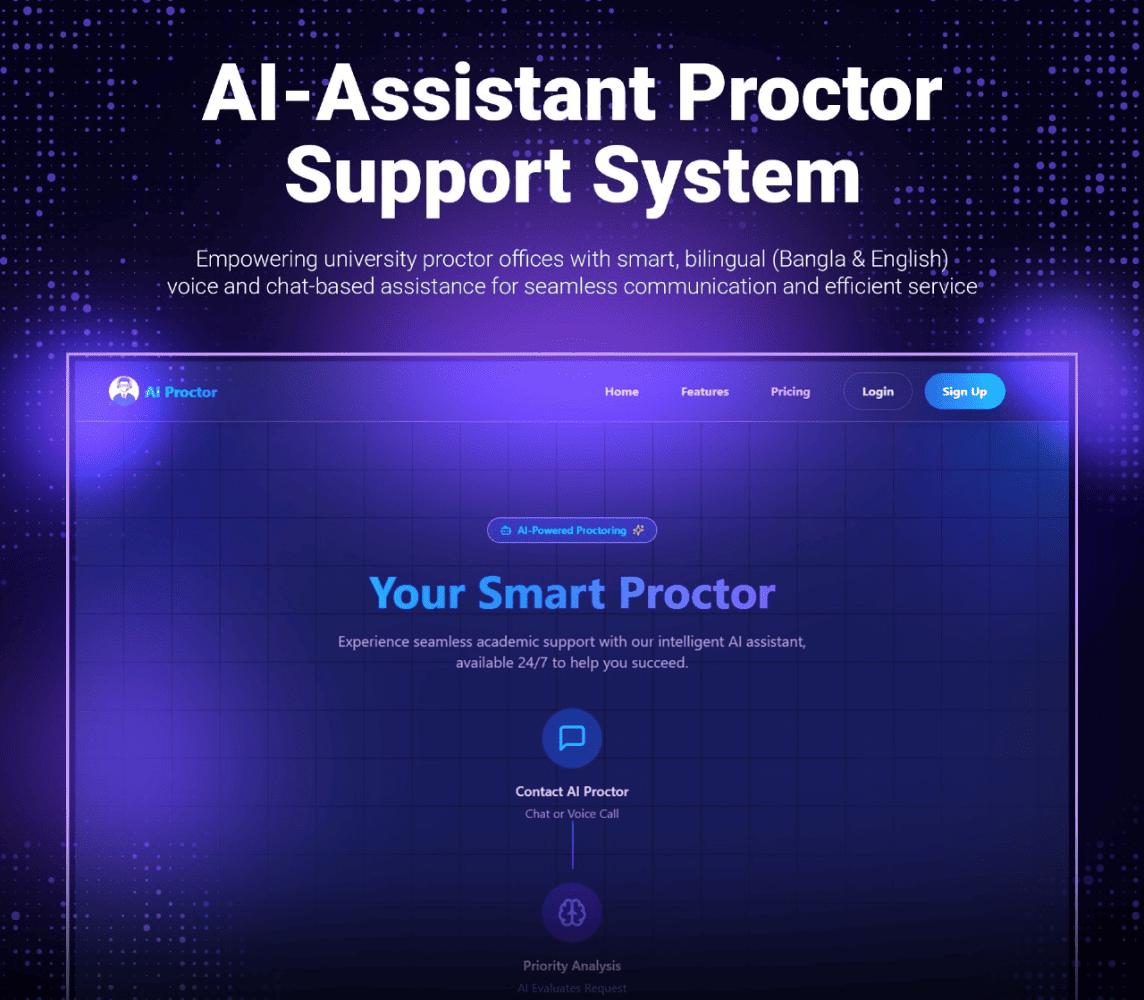
AI Proctor at DIU: 24/7 chat and voice help for students with an admin panel.
Customer support & call centres
Answer common questions by chat or phone and hand off complex cases.
Document Q&A
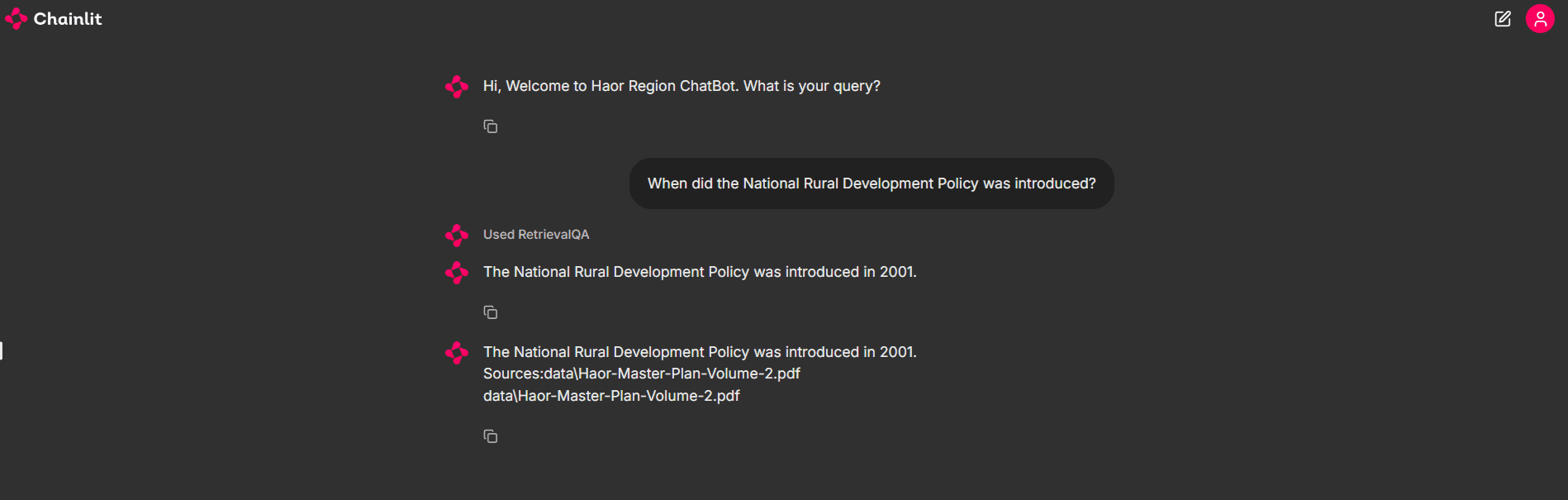
Private chatbots over PDFs and scanned files, even fully offline.
Education
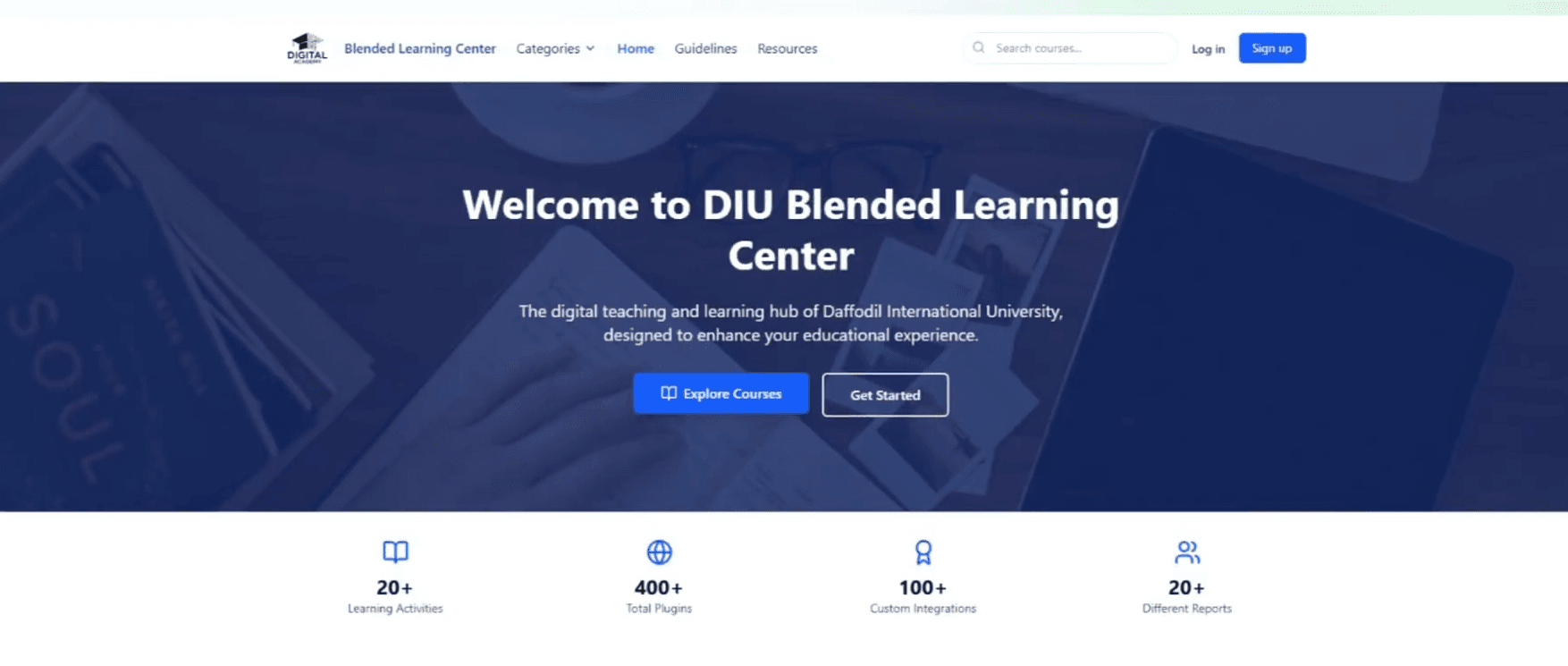
Bilingual tutoring assistants with voice support.
HR & internal help desks
Policy, onboarding and IT questions answered instantly.
Related projects
Real systems built with this service, each with a full case study.
Common questions
- How is this different from a basic chatbot?
- A basic chatbot follows scripts or guesses from general knowledge. This assistant retrieves evidence from your own data with hybrid search and reranking, cites sources, and is evaluated for accuracy before launch.
- Can the assistant speak Bangla?
- Yes. Assistants are built bilingual (Bangla and English), including mixed-language questions, in both chat and voice.
- Can it answer phone calls?
- Yes. Voice assistants run on the web or over phone lines with real-time speech recognition, natural voices and handoff to a human.
- Will our data stay private?
- Your data stays in your own database and cloud. For strict requirements, open-source models can run fully on your servers.
- How do you keep answers accurate over time?
- Every conversation is traced with Langfuse, a golden question set is re-run after changes, and the knowledge base is re-indexed as documents update.
Have an AI problem worth solving?
Tell me what you are trying to build. I will tell you honestly whether AI is the right tool, what it would take, and how I would approach it.
Typical reply within 24 hours
Working from Dhaka, Bangladesh · remote worldwide